Wow You Look Really Fat Today!

A confronting part about living in Indonesia is the Indonesian style of commenting on your appearance every time they see you; if you have a zit, if your bum looks big, if you have lost weight, or your new hairstyle makes you look “fresh”; if your face is red after too much sun, or you look a lot darker since the start of the holidays, you have to be prepared to look forward to a blatantly honest judgment on how you are looking.

Being a woman with constantly fluctuating weight, where some days I have to squeeze into my biggest pants and not feel totally great about it, it takes a thinking shift to accept that someone at some point throughout the day will tell me that it’s amazing how quickly I can get fat.

These comments aren’t meant in a spiteful way, but I find it to be a hilarious point of difference between the cultures. Even with my closest friends from Australia, apart from a general comment in the positive such as “I like your new dress”, “you look great”, we don’t generally dwell on how someone looks. This has been taught through our education of being politically correct; to speak generally about appearance, to not mention racial features (wow, your skin is very black today), to be aware that to be a woman generally means to have hang ups about how you look with a potential eating disorder just around the corner. So whether we have a quick thought upon seeing our friends such as “damn, I wish I had her ass” or “maybe she shouldn’t have worn that dress”, we keep our mouths shut and move onto other things.

Indonesians have a different style altogether. When I was chatting with one of my fellow teachers, a beautiful teeny-tiny Indonesian woman, she told me that she was on a diet because she had got really fat over the past few months. I looked her up and down, and could only see size teeny tiny, and told her that I hadn’t noticed and that she looked great to me. She said that her old friends who she hadn’t seen in a few years had told her that her bum was looking very large and her face was chubby when they had met again. I laughed out loud at these comments and tried to explain to her that in Australia, we don’t ever meet old friends in that way. She was kind of amazed that it wasn’t a part of our general conversation, and after mulling it over in her mind for a while she said to me, “You know Katrina, if I had met these old friends and they hadn’t commented on how I looked, I would have been offended and assumed that I looked ugly. And I would eventually ask them..soooooo….how do I look?”.

Over lunch with Indonesian friends, a constant topic of conversation (aside from men and sex – there go those Muslim stereotypes again) in which I usually listen mouth agape thinking “oh my god, I feel like I should be wearing the jilbab (head scarf) cause I am obviously more conservative than these women”, the women are always talking about the size of someone’s boobs or bum, telling each other who is looking fatter than usual, or who definitely should not have chosen the outfit they are currently wearing cause they don’t look very beautiful. Another friend of mine hangs out with her friends and each of them has been named after a sea creature depending on their personal appearance or personality; try and imagine being nicknamed the whale or the salty fish. I think I might be the puffer fish.

In a more politically correct country if you are trying to describe someone, you try and choose the most polite ways to describe them such as, “Which one is Douglas?”, “Oh he’s the tall, slightly built man with the short black hair”. When you meet Douglas, he may be a 10 foot giant albino with buck teeth, no legs, 6 fingers on each hand. But we were just trying to be nice. In Indonesia they get straight to the point. “Who is Hasan?”, “Oh he’s the really black one with greasy long black hair with a bad side parting, small wrinkly hands and Chinese eyes. His wife says he has a very small penis, and he is really lazy at work”.

Working in an International school, the kids come from everywhere. In the middle of my class when one of the teachers said, “Wow, what an international class we have; the Indonesians, the Indos, the black one, the Chinese one and the bule”. All of my political correctness training made my stomach lurch, and then I looked at her smiling face, looking at the children and loving them, whatever they looked like, I had a feeling that my training had left a gap in my consciousness.

Indonesians aren’t afraid to let it all out. They share their thoughts and feelings as soon as they happen (well it seems that way to me). I could sit with my Australian friend and laugh all night and months later she might say to me “you know that night we met, god I felt really depressed”, but it’s all stored inside.

Indonesians talk about appearance, analyse it a little together and move on. I don’t think eating disorders are really an issue in Indonesia (for the people who can afford to eat). We keep our mouths closed and hope that no one notices us too much. And the rate of eating disorders is forever rising in Australia.

Well whatever the reasons, at least I know straight up if I should have chosen my outfit or if it makes me look fat. And then I can move on. I have to learn to accept that my boyfriend will grab my love handles and say “wow you have been eating a lot of toblerones” and laugh, and for me not to decide then and there to cut down on chocolate consumption. Cause that just wouldn’t be me.

And if Indonesia is teaching me anything, it’s that there are a lot more important things to worry about than how you look. Things like “how can I afford to educate my children?”, “should I eat nasi ayam or nasi gila?”, “is that a bule shopping at a warung?”, “were Ariel’s moves that great?”, “should I let him hold my hand in public?”, and the most important question, “what would Allah think?”.

So if you’re feeling a little insecure, come to Indonesia, let the people marvel at your big nose, hairy arms and ever growing ass-size, and lap it up! Because apparently, it doesn’t matter! Yaah!
Add to DeliciousAdd to DiggAdd to FaceBookAdd to Google BookmarkAdd to RedditAdd to StumbleUponAdd to TechnoratiAdd to Twitter

Masuk Angin: Believe it or not?

When it comes to taking health advice from Indonesians, I have to admit, I have been a little skeptical. This comes from Indonesian friends telling me that Indonesian cigarettes are really healthy because they are made from herbs (not tar and nicotine), and from the constant cracking of bones every time an Indonesian stands up (spine, arms, fingers, toes, neck – crack, crack, crack – AYO PERGI), from the love of everything deep fried, and the belief that KFC is a kind of health food.

As well as this, while I have heard that the Indonesian national sport is badminton, (once a friend told me that he used to be an athlete in school – I asked in an amazed way watching him suck down a lucky strike, “wow – what kind of athletics?”, and to my great amusement he replied, “badminton”), I wouldn’t describe Indonesians as a nation of athletes. In fact, it is a nation of using anything but your feet to get to a destination. If you have to go more than about 30 metres, you need a car, or an angkot, kopaja, or preferably, a motorbike.

Anyway, so many times with Indonesian friends, I would overhear a conversation about “masuk angin” where the sufferer of this affliction would show their backs which were covered in what looked like bruises from being whipped. I looked at these wounds in shock, and asked what the hell happened to them, to which they would respond calmy in English, “I am windy in – I have masuk angin”, as though this was an answer that would make any sense to me. I tried to make sense of this illness, asked many questions but could only make out that the sufferer had wind inside and maybe wanted to burp and fart a lot, and to cure this illness you needed some kind of oil and a coin and the coin was used to rub these bruises into your back which would help the wind escape. Bingung? Yes, I was.

To protect themselves against this affliction, Indonesians don’t sit under air conditioners or open the window on a bus. Wind is dangerous. Inwardly I scoffed at masuk angin, outwardly any time anyone burped (and people burp a lot here) I would say, “masuk angin?” half jokingly and they would often reply seriously in the affirmative.

This inward mocking came to a grinding halt one day after I spent the day feeling not quite right. My stomach was rumbling, I felt the need to burp a lot, and I kind of just wanted to vomit. My sweety pacar suggested that I may have masuk angin so I consented to receiving the treatment, known as kerokan, for sociological purposes of course, thinking that I may as well give it a go. So he got the oil and the coin and scratched my back, and it kind of tickled and sometimes hurt, and when it was all finished I fell into a deep sleep. When I woke and looked at my back, it was covered in those scratchy bruises, and I felt great. My health felt normal and I wanted to wear a singlet to show off my bruises to say, “Hey everybody, I had masuk angin too, check it out”.

So now I can’t scoff about masuk angin.

But I am still skeptical about panas dalam (hot inside). Let’s see.

Add to DeliciousAdd to DiggAdd to FaceBookAdd to Google BookmarkAdd to RedditAdd to StumbleUponAdd to TechnoratiAdd to Twitter

Jakarta or Bali?

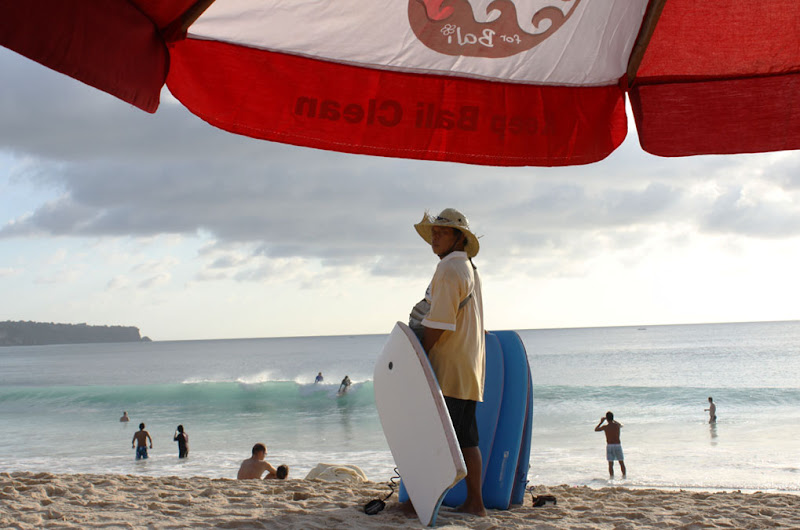
Body boards for hire at Dreamland, Bali

One of the first things that an Indonesian will assume about an expat, is that the reason that they are in Indonesia is that they love Bali. And one of the first things an expat may think about Indonesia, if they are more of the garden variety suburban types (such as myself) is that Indonesia consists of one main island, Bali, and on that island you can spend a lot of time on the beach, get a tan, find cheap beer, buy pirated DVDs, get your hair plaited and buy a colourful shirt with some geckos on it. And most people in Australia, from minimum wagers to those whose bank accounts are overflowing, can afford a trip to Bali at least once in their lives. You can see spot an Aussie easily in Bali – they are either sunning themselves at some fancy resort, or picking a fight with a bemused Indonesian at 3am after one too many arak attacks.

Before I left Australia to live in Jakarta, a friend of my brothers, who had studied Indonesian culture at university (thus knew more about Indonesia than just Bali) asked me what I why I was going to move my life to Jakarta. I told him (and I am cringing here) that I had been to Bali and knew that Indonesians were friendly people, so I guessed that the Indonesians in Jakarta would be friendly too. He asked me “are you living in Jakarta or Jogyajakarta?” and I responded, “umm, maybe Jakarta” and he shook his head and told me that maybe Indonesians would appreciate it a bit if I knew something about their country before I got there.

So I bought a book about Indonesia to read on the plane (a lot of preparation) and discovered that I was moving to an island called Java; Jakarta was in the west and Jogya was in the centre. Java was the most populated island in Indonesia, it used to be the centre of trade, and when the Dutch claimed it as their very own colony, they destroyed the kingdoms by pitting them against each other, took over the farmers land, and planted cash crops like sugar, all over the island and in turn eventually made the Netherlands, (who prior to “founding” the colony were on the brink of bankruptcy) extremely wealthy, and subsequently made Indonesians extremely poor, and with no land left and traditional ways of earning a living gone, millions of people eventually made their way to Jakarta with the hope of being able to survive there.

Yes, this is a crude rewriting of history, apologies if I am in error here. Even when the Dutch were here, Jakarta had become unmanageable; no infrastructure, no clean water, houses built on top of other houses, masses of people leaving their home land, or being removed from it, and winding up in Jakarta, people trying to find room to live; the Dutch did nothing to maintain the city, did nothing to educate Indonesians, so by the time they left Jakarta was a bit of a mess. And it still is.

But there is something special about living in Jakarta despite all this. It was when I went to Bali after a few months in Jakarta that I really realized why I love Jakarta.

When you go to Bali, particularly notorious areas such as Kuta, Ubud and Legian, the majority of people you will see there are expats. Every time you leave your room, although it has certainly changed since the days when the thousands of watch sellers would follow you down the street applying the pressure to buy a fake Swatch watch, someone will offer you something. And then you will get the same offer a hundred more times before you reach your destination. “Transport, transport, transport, transport…massage, massage, massage, massage”. It is said almost robotically and if you want to see a show choose a spot to sit in a café where you can watch the Indonesians say “massage, massage” etc and watch as the tourists jump a little, then veer off as far away from the Indonesians as possible onto the roadside, maybe shake their head a little and clutch on to their newly purchased fake Calvin Klein bag. Meanwhile, the Indonesians, unfussed, continue their conversations with their friends until the next expat comes along, and you can see them jump again.

Again, I may be making mass generalizations here, so you can refute me if I am wrong, but I have a feeling that the majority of tourists who go to Bali are actually bored shitless. I mean, it’s a great fantasy to go away and have an island holiday after a hard year’s work; to see yourself sunning yourself on the beach all day and sipping cocktails all night, but the reality is that when you have a week’s holiday; it is impossible to relax, you are too wound up. You sit on your banana lounge on the beach and sellers come up offering you their wares – they see you wearing sunglasses so know you like sunglasses and try and sell you more, they see you lay down your new Balinese batik sarong, assume you like those, so try and sell you another one (hey, buddy, I have one already, I don’t need another one!). So you can’t relax on your beach lounge so you decide to walk around and look in the shops; oh wow, they have a Just Jeans and Gap, just like at home, with the same prices. So you go to the market and buy a Bintang singlet and some souvenirs to make your friends jealous, but get scared cause all those people are trying to sell you more things you don’t want. So you try some watersports, go bungee jumping, get a massage, a pedicure, get drunk again and return home, go back to work, and look forward to the week end again.

On the other hand of course, there are people who find paradise there. If you love to surf you can hire a motorbike for peanuts with a surf board rack on the side (I have almost been wiped out several times by these mad surfers), enjoy the freedom of no road rules, cruise around looking for waves by day and at night cruise around looking for women (or men); and you will find these in abundance, alongside cheap beer, local (head pounding) wine and all night dance parties. You can befriend the beach boys (anak pantai) and they can take you to their favourite surf spots. Or you can befriend an anak pantai and take him home as your husband. Backpackers meet other backpackers, find a travelling companion or a holiday romance and spend the day seeking adventures. Yes, it’s a mixed bag.

The thing about Bali is, it seems to have been shaped by what tourists want, it is a tourist paradise, but in this world you, as a tourist, may find it hard to meet a Balinese person who sees you as more than a way of making some money. People who work in the world of tourists are a lot smarter than the tourists themselves, maybe those who have been backpacking for a while, the more ‘seasoned’ travelers, are wiser than the Aussies fresh off the boat, but you have entered their world, and while you may feel you have the power, you may find yourself after asking someone, “where is a good place to get some fresh seafood where the locals eat?” at a huge and expensive restaurant on the beach as traditional dancers sashay around your table, thinking “hmm, this isn’t what I had in mind”.

Bali is an island that is rich in tradition. Hindus have a festival for every occasion, people respect their elders, they have intricate layers in their society which they hold onto, every house has a temple to make offerings, they have a lot of gods to appease, they are fighters – you know, when the Dutch came to take over Bali, the Balinese fought them off – men, women and children on the battlefield (which their land had become), and when they realized that they were going to lose, they committed mass suicide rather than surrendering to Dutch power. But once you get there, maybe the Balinese are protecting the richness of their culture from outsiders; maybe they just want to show a little of what they are made of at public festivals or dance performances, but if you just visit Bali for a short time, anything more than this is hard to find. You are just there to help the economy. And that’s fair enough. But not always satisfying.

This is all of course a matter of personal opinion, so you can disagree with me of course, but my preference is to travel to new places to see what makes it tick, rather than go shopping, find cheap things or meet more Australians. I like random adventures, cultural exchanges and seeing things that you don’t see every day, that are really just normal for the local population.

That’s why I like Jakarta. The Jakarta experience is different. Jakarta isn’t made for tourists; it’s made for Indonesians. If people come to Jakarta on a stop over, they look afraid; they grit their teeth and try and wait patiently for their train to depart to Jogyajakarta. While in Bali, like in other tourist paradises, the locals may want to talk to you to eventually sell you something (and the more seasoned travelers are very wary of this so try and avoid contact), in Jakarta and (and Jogya and Sumatra and on and on) people just want to have a chat for chatting’s sake. They want to practice their English, to know that you like Indonesian food, to ask you random questions they had been wondering about bules (“do you only eat bread and cheese?”), and then they wave goodbye.

When Tash came back from a visa run to Singapore, she caught the shuttle bus from the airport to Blok M, and as usual, got talking to the people on the bus, one friendly man in particular, and when the bus dropped them off at their destination, the man’s family was there to greet him and they insisted on driving Tash to Kemang; mum, dad, brother and sister, driving out of their way to ensure she was safe; swapping phone numbers and facebook accounts, offers of dinners or any other help she may need.

This is why we love Jakarta. The treasure is not buried deep here. It’s everywhere.
Add to DeliciousAdd to DiggAdd to FaceBookAdd to Google BookmarkAdd to RedditAdd to Twitter

A day around Kemang and FX Plaza…

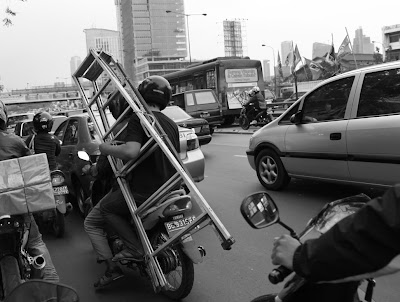
Macet on Jl. Sudirman, Senayan

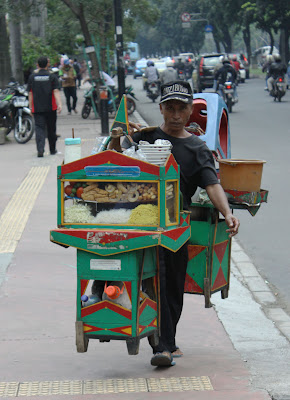
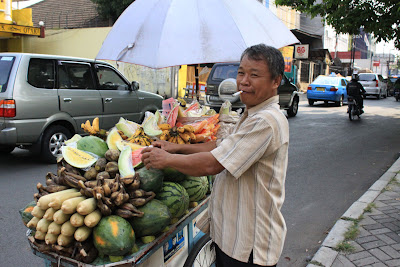
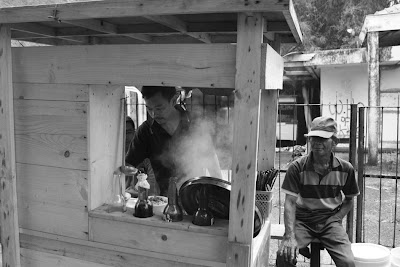
Mr Noodle Man... carrying his shop on his shoulders on Jl. Sudirman, Senayan

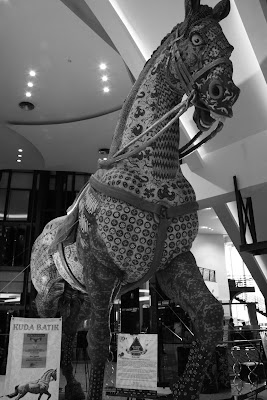
..as the sign says "Big Horse Statue".... yes, a big batik horse statue at FX Plaza

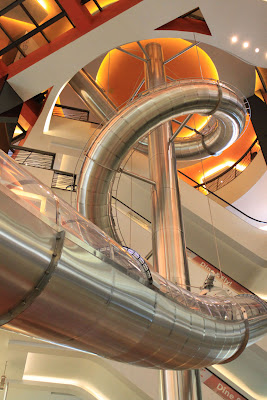
....and a BIG slide inside FX Plaza... what the?

.... hmmm.. the theme of today is BIG... big cool shoes at Mazee in FX Plaza...

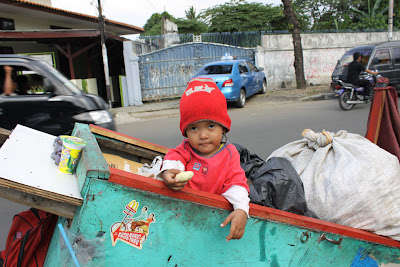
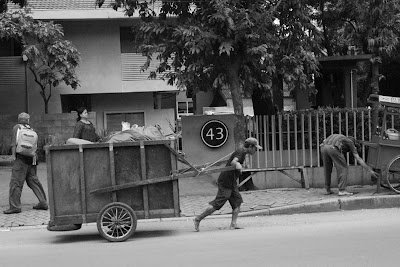
..going home along Jl. Kemang Raya in the back of a rubbish cart....

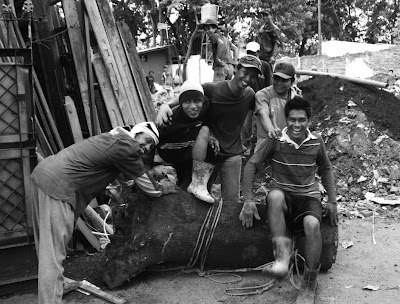
...hard at work on a construction site on Jl. Benda in Kemang....

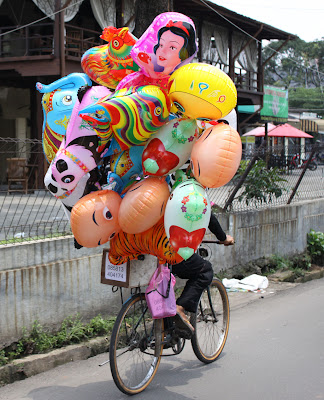
I want one of these! riding around in Kemang…..
Add to DeliciousAdd to DiggAdd to FaceBookAdd to Google BookmarkAdd to RedditAdd to StumbleUponAdd to TechnoratiAdd to Twitter

Tebet

The first of many people to ask for their photo to be taken today!

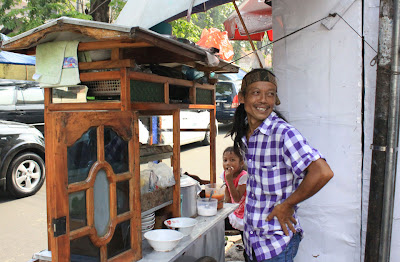
"Mau makan Baso? photo please...."

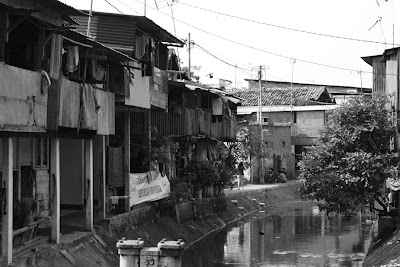
Houses along the canal

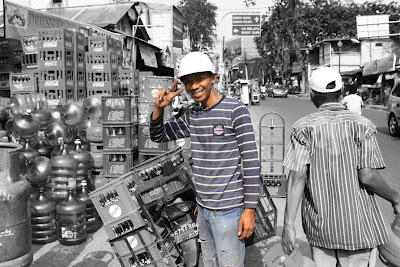
I love his tshirt.... One Family Under God

Hello Mister!

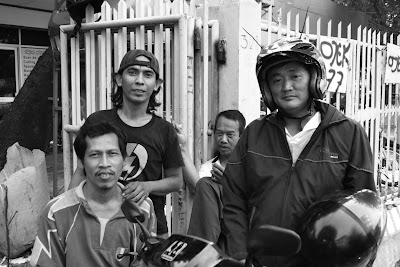
Super friendly Ojek stand!

They so wanted their photo taken! but were more interested in the tooting horns and whistles coming from the traffic as they posed!

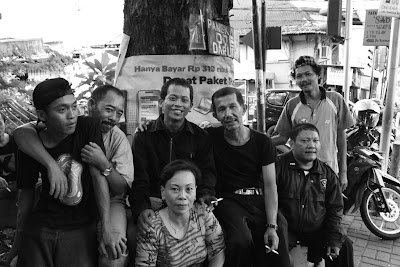
Please print our photo for memory and come tomorrow.....

Not an easy task in crazy traffic!!!!

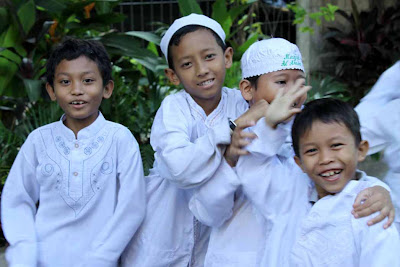
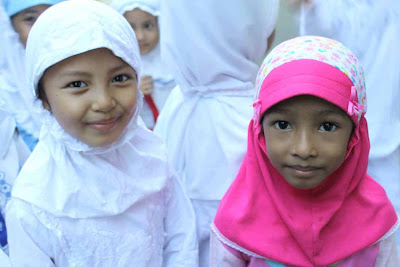
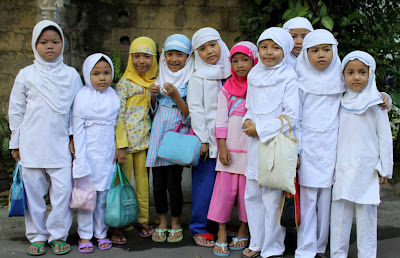
Rainbow children xx

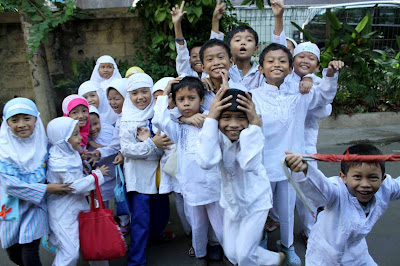
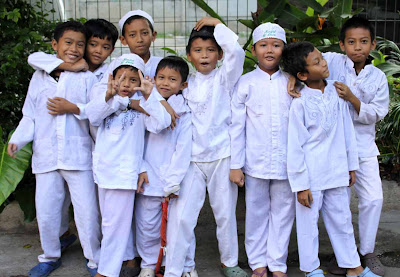
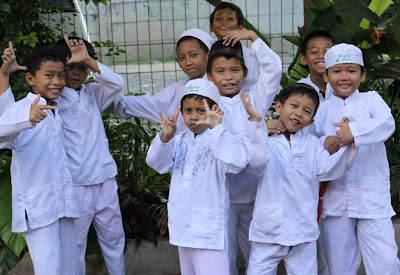
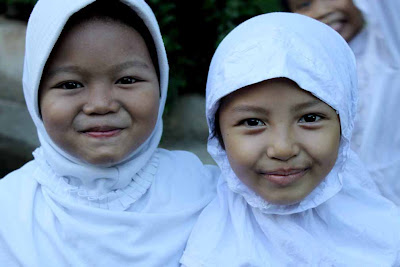
Scary Muslims? What the?

It’s a funny part of life that you never really know the place you come from until you leave it. Before I left my suburb to go around Australia I thought pretty much everyone was white and catholic. It was only after leaving Australia I realized that I grew up on an isolated island at the bottom of Asia, and the world, which had for reasons of colonization, space, greed and power, tried to shape itself on a small island at the top of the world. And how my world view had been shaped, not by our Asian neighbours, but by Australia’s political alliances; we were the “West” and we had friends in high places in America and England – even if we were shining their shoes, or kissing their asses, we were still friends, right?

With this kind of upbringing, no matter how great my education or my understanding of how the media is used as a progopanda tool rather than a propagator of truth, I still remember when I was in my early 20s on my first overseas trip with my girlfriends to Bali, when we were parting ways and I was going back to Australia and they were continuing their travels to god help me, Jakarta, I remember having this image of a city full of people in head scarves carrying knives, you know, full of Muslims, those really, really scary people who want to take over the world. When I think of it, I don’t know where I got those ideas from because we never learned about Islam at school, we were too busy learning about the great Australian explorers and the gold rush. We never sat around our dinner table discussing religion and politics. I had no religious belief at all except the belief that going to church was really boring. I had never met a Muslim person that I knew of, but somehow I had imbibed the fear of Islam.

It is only through chance and good fortune in my life that I was able to question these unconscious feelings through my love of travelling to new places. When I went to India for the first time, I was afraid, and people in Australia were afraid for me; “watch out for those Indians, they will rob you, it is a dirty place, the people aren’t good, there are lots of Muslims there”; all viewpoints they had learned through their lense of nationality – where Australia was good, the West was good, and all the other countries in the world were dangerous. Coming from a country like Australia in which national identity had been shaped on the fear of Asians taking over, to decide to travel to these places was a great risk to my personal safety. Apparently.

But to my utter surprise, when the fear of being in an unknown country wore off, I found myself in a place that was a like a dream; where the hospitality moved me to tears, where I felt free and alive and my eyes were opened to the beauty of difference, where those who had the least offered the best hospitality, where Muslims lived, shopped, raised their families, went to school, went on holiday, invited me into their homes – my god, they were just like normal people. I couldn’t see any knives or guns anywhere in their houses.

It was after this experience, that my blinkers came off – people were just people everywhere. People had beliefs, people had wants and needs and dreams, people were trying to survive. So when I went back to Australia and watched the news through my new eyes and saw politicians and the media trying to shape a national identity on what we are not, “hey look at those refugees trying to sneak into our free country, they don’t love their children as much as we do”, “hey look at those crazy Muslim people, blowing each other up, trying to take our freedom”, “Hey look at those dark skinned people in some undisclosed nation killing each other, aren’t you glad we have democracy?”, I realized how insecure people and the politicians who “lead” them, attempt to define the world according to what they need in order to maintain power and to keep their friends. They can define what is good and what is evil, what is black and what is white, and once their definitions have taken hold, they can do what they want.

When I told people in Australia that I was coming to live in Jakarta, they were really scared for me. Someone even told me to pack a gun to protect myself from the Muslim terrorists. People now are more afraid than ever of the Muslim other – the news is filled with stories of suicide bombers, muslims in some country or another killing each other (the West coming in to intervene).

Luckily for me, I didn’t take heed of their warnings.

Now as I work in a place where 99% of the staff are Muslims, it makes me laugh so much to think of the stereotypes of Muslim people. I mean, of course it would be funnier if the stereotypes didn’t lead to so much violence. But the idea that Muslim people are scary is just so totally absurd. All I hear all day is the sound of laughter.

When I think of my 22 year old self in Bali, scared for my friend going to Jakarta, I feel a bit sad for her, but lucky that she had the opportunity to shake off that fear. Now I live in Jakarta. I am surrounded by Muslims. I work with Muslims. I eat with Muslims. I am friends with Muslims. I even love a Muslim. God help me. What will my government think of me? Have I abdicated to the other side? Will they take away my citizenship? The lessons of my life and my travels have become so clear to me after spending a year in Jakarta; people are just people. The women talk about men and sex and fashion and football, the men talk about women, money, food and traffic. And vice versa. Ah it’s just the same. Here of course their eyes are focused on Indonesia; most people in the country can’t afford to travel and see different places; leaving Indonesia, let alone Jakarta is something of a pipe dream.

Anyway, my point is the great joy of being able to refocus your eyes to believe what you see before you, rather than what you have been taught. In Australia, I don’t have any religious friends and if someone brought their born again Christian boyfriend to the party, we would probably steer clear of him and wonder if our friend was in trouble. Here, every friend I have either goes to church or fasts during Ramadhan. None of them are terrorists. All of them love their country. None of them want to blow me up. All of them have welcomed me with open arms into their country. I wasn’t afraid of Islam when I came; I just had that guilty feeling like I had when I was working with Aboriginal people; for a people who had everything taken away from them by the colonialists – my ancestors – and I was scared of being disliked because of it. But Indonesians have better things to worry about. Are their families safe? What should they eat? How will they get from South Jakarta to North Jakarta in traffic?

Ah I have so much to learn. And what a great place for an education.
Add to DeliciousAdd to DiggAdd to FaceBookAdd to Google BookmarkAdd to RedditAdd to Twitter

Cruising the streets of Kemang

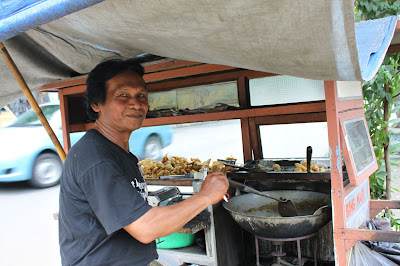
Roadside warung - enak!

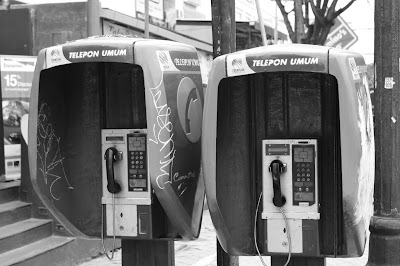
Phone booths..... does anyone use these anymore?? It's all about the Blackberry!

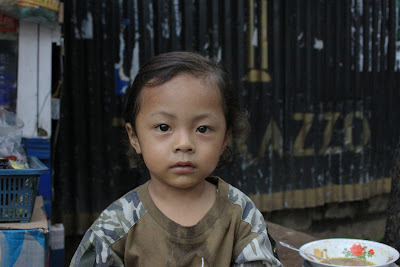
... this little boy was so shy and soooo sweet!

...it's a tough life for a garbo....

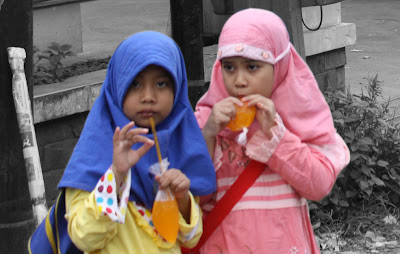
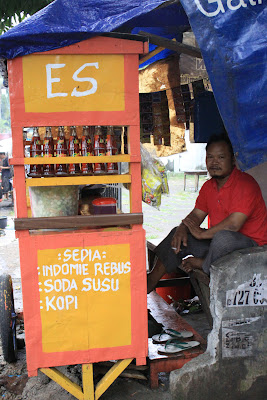
.... a refreshing drink?...

...more delicious treats.....

...hmmm.. a street photo frame seller...

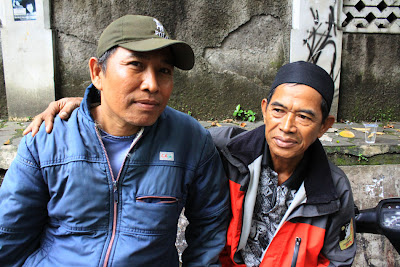
...stopping for a chat...

...i love the colours......

...the perfect santai (relaxing) pose for a rainy afternoon....

Cruising with the traffic...

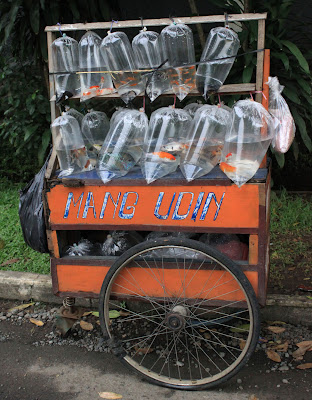
...need fish for your tank?....

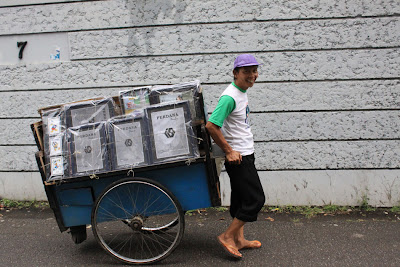
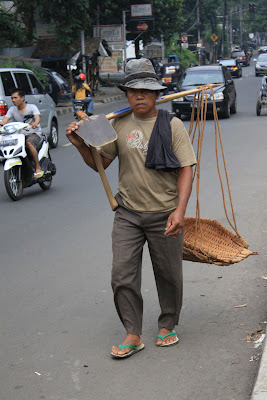
Heading home after a hard days work..

Treen's favourite ojek driver!

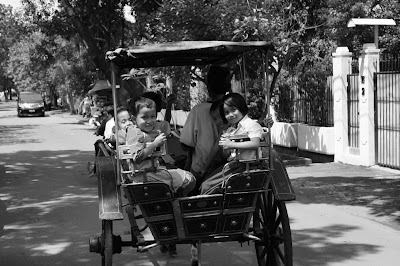
Children taking a horse and cart ride...

The Streets of Jakarta during Idul Fitri….

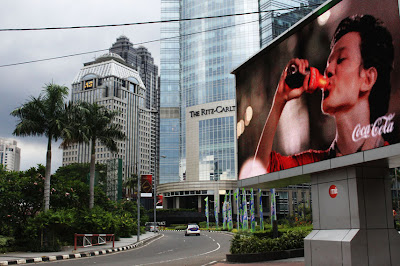
....traffic free streets near the Ritz Carlton... it's unheard of!!!

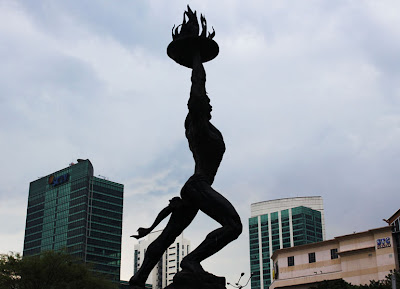
The 'Pizza Man' statue!

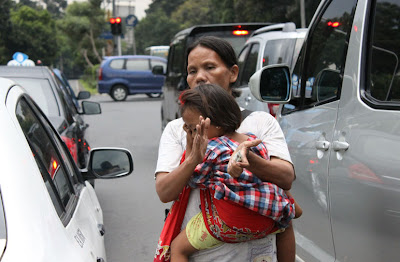
People are meant to give 10% of their wage to those less fortunate during Ramadhan...

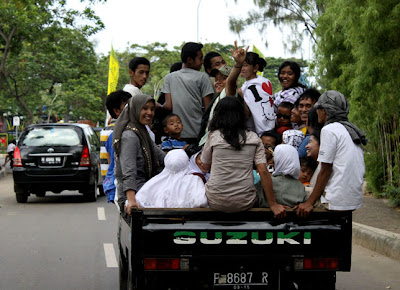
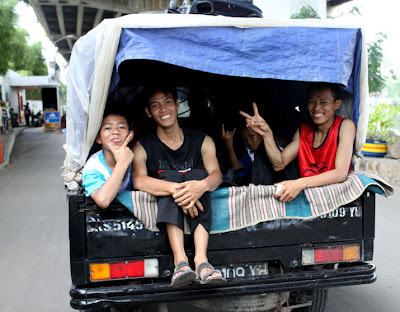
A novel way to solve the problem of traffic jams in Jakarta…. fit as many people into one vehicle as possible!

Never a dull moment!

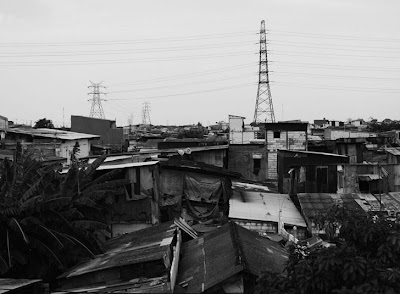
Jakarta rooftops!

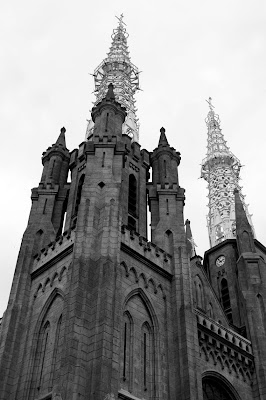
Beautiful Kathedral Jakarta

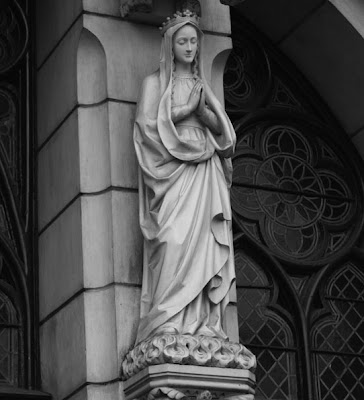
I love this statue..

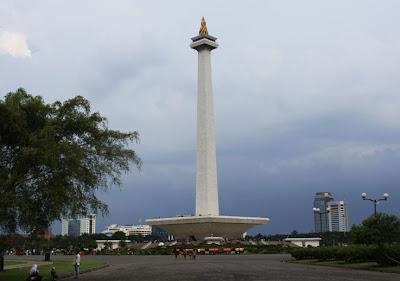
the famous landmark of Monas, minus the usual throngs of locals!

Cruising the streets of Jakarta

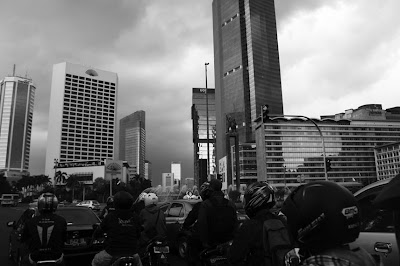
Ah, not much macet today at all!

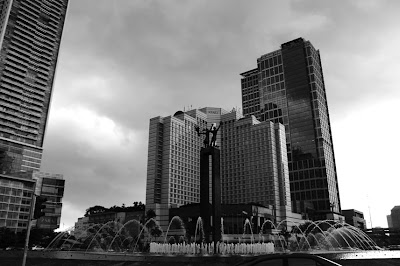
The fountain roundabout outside Grand Indonesia

yipppppeeeee! my favourite pastime.... cruising around on the back of the motorbike!