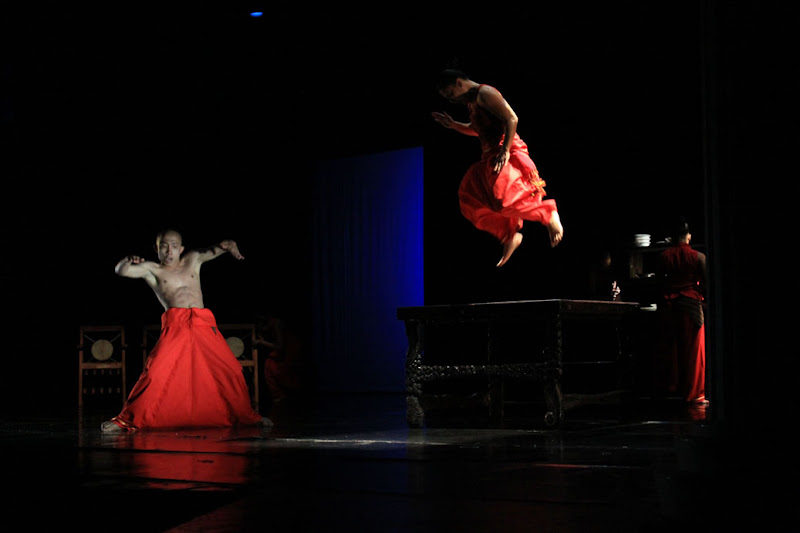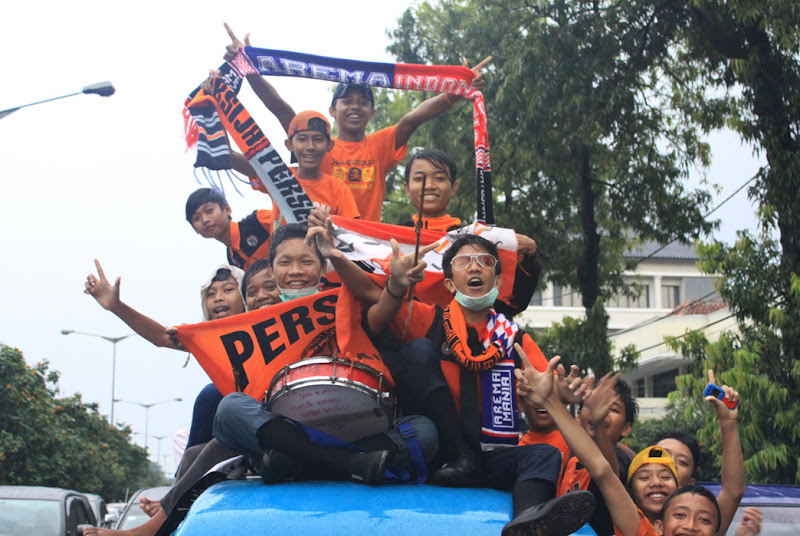
Around Jakarta..

Jakmania... Jakarta's biggest football supporters, near Senayan
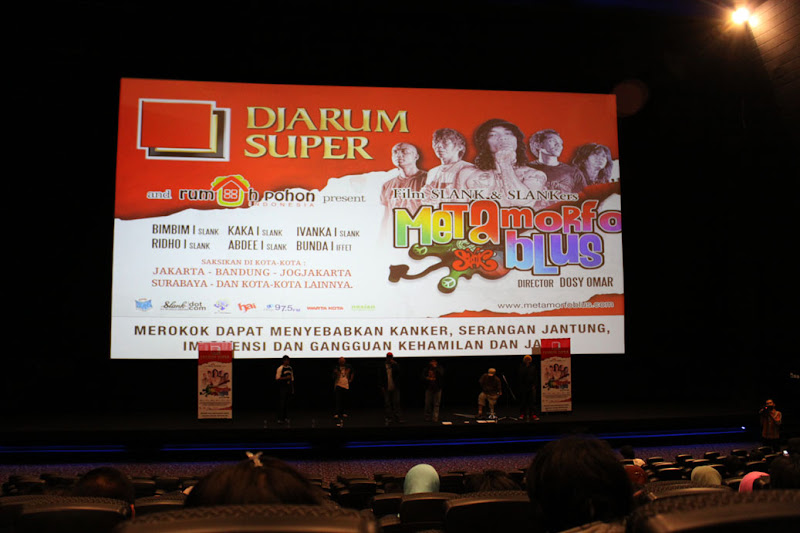
Jamaica Cafe take to the stage at the Gala Premiere of Metamorfo blus at Grand Indonesia
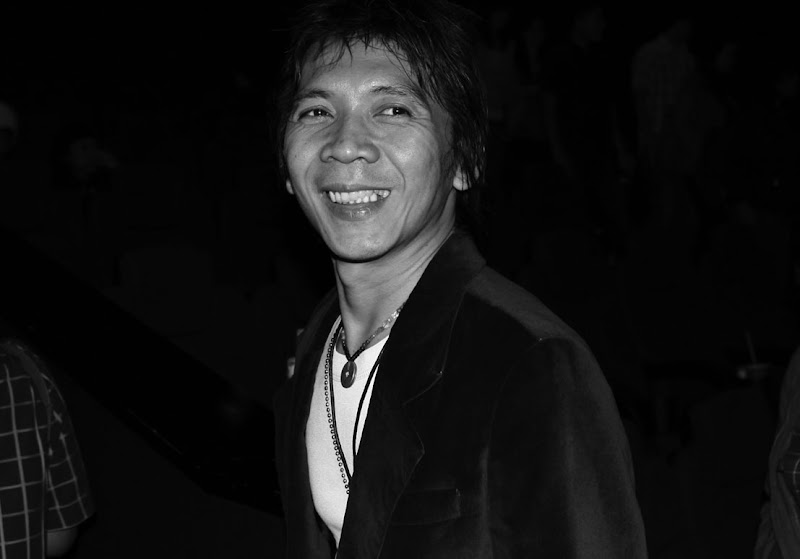
Bimbin, Slank's drummer, what a great guy.... We are new SLANKers.... wkwkwkwkwk
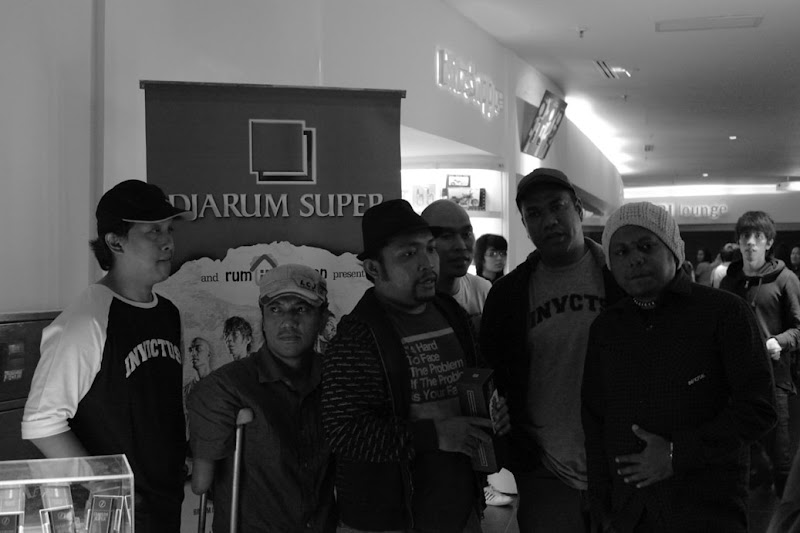
Jamaica Cafe at Blitz, Grand Indonesia... amazing vocals.... love them!
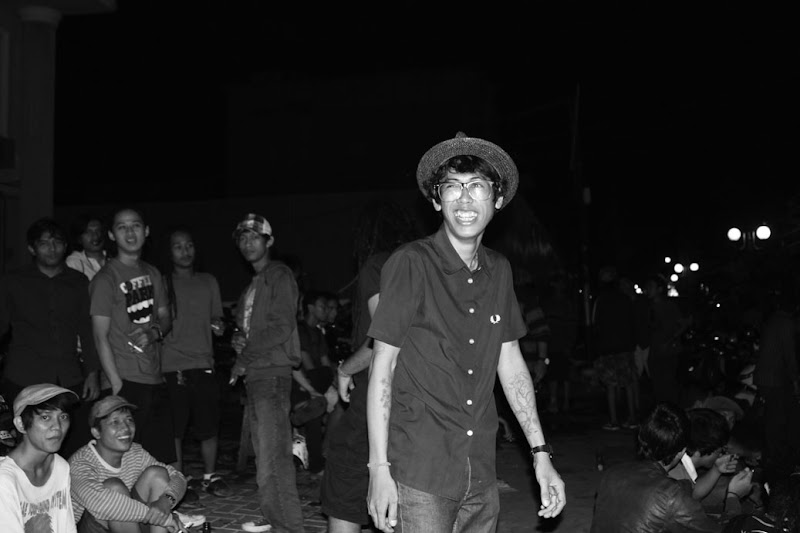
Fun time on Jalan Jaksa at "Bersama Sembuhkan Luka"...
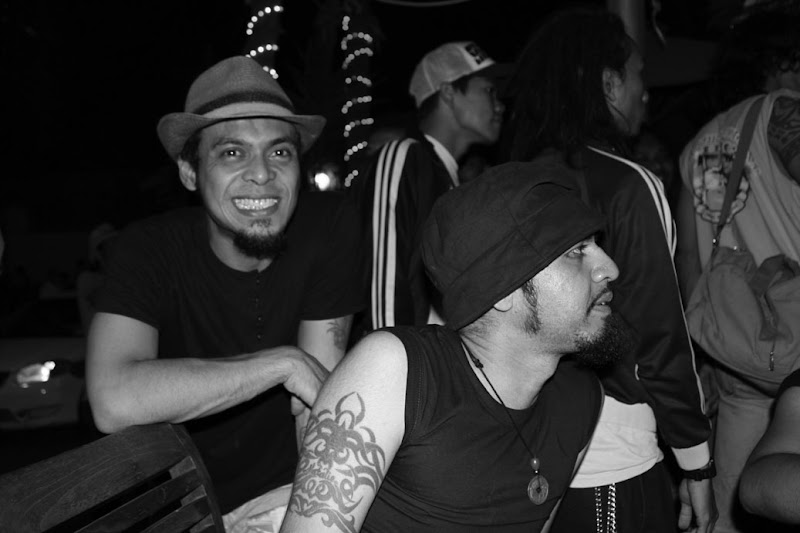
Pynot and Udjie from Cozy Republic at Charity for the Victims of Disaster at Equal Park, Jalan Jaksa
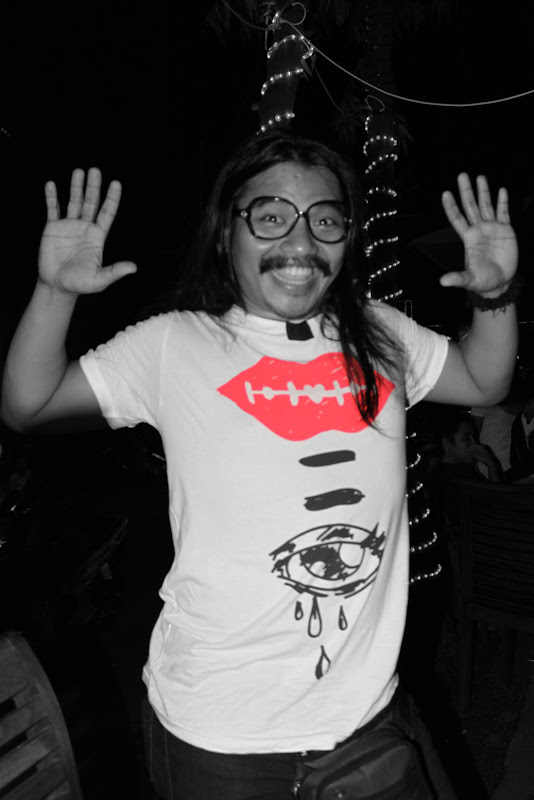
....going crazy on Jalan Jaksa.....

Lessons from Jakarta

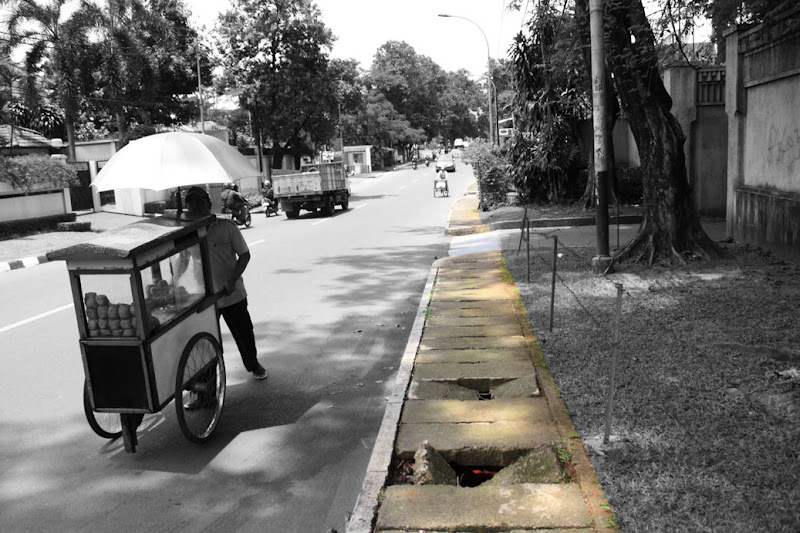
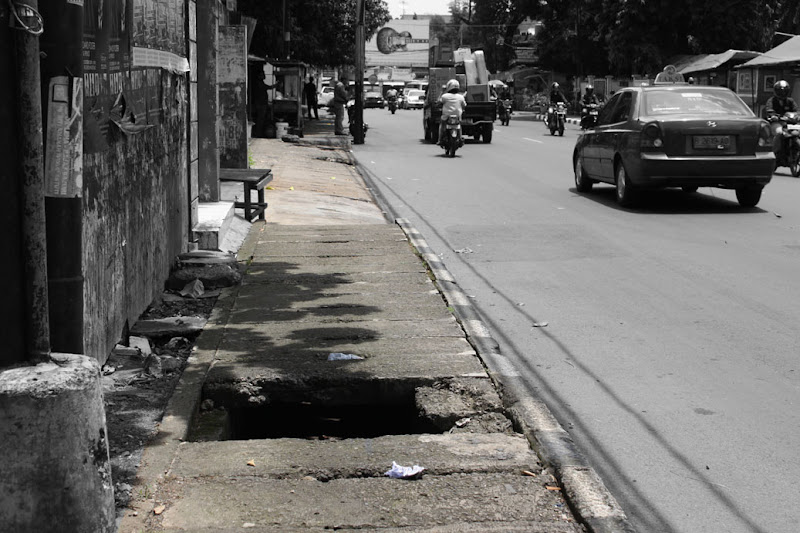
Careful of the footpaths on Kemang Raya.....
... more gaping holes on Kemang Raya....

A great thing about living in a new place is that it makes all of the things that you thought were ‘normal’ become ‘strange’. All of your habits, routines, rules that you live by; things that you think are valuable or of the most importance, often lose their sense of urgency or significance as you fumble around the new world you find yourself living in.

This is very true in Jakarta. As I have written about before; to become a bule is to become an ‘other’ and through an Indonesian’s eye, you can see the absurdities about yourself. For me, because of my culture and upbringing, I have a feeling that I don’t want to be in anyone’s way and that I will probably get in trouble at some point throughout the day. This trouble may come from one of the ever-increasing ways that our government has of sucking money from us; speeding fines, parking tickets, smoking in the wrong place, putting your feet up on a seat, no seatbelt, no helmet, crossing the road outside of the approved crossing area, not wearing protective clothing, having a broken light, eating food on the bus; the list is endless.

The other reason we often find ourselves in trouble is when we get in someone’s way; people are busy, they don’t have time for fools, for questions, for requests, and they have so many rules which they must follow themselves; so people have their head down and charge through, trying to avoid conflict, to avoid fines, to avoid knocking into someone.

So if we need to order something at a restaurant, we have our meals selected before we dare seek the attention of the waiter; if we have to pay for the bus, we make sure we have the correct change ready; if we have to line up at the post office, we have our envelopes addressed, our bills facing up the right way, and our credit cards armed and ready. At an airport, our luggage is already packed and labeled before we reach the counter. And for me, there is a slight sense of panic if I am not ready when it is my turn; panic that the people behind me will start breathing heavily, and the person at the counter will tell me off. It is very deeply ingrained in my conscience – or subconscious..is it?

When I first came to Jakarta, I held onto these rules firmly and added to my rules was the fact most people don’t speak English, thus my time at the counter would increase as I attempted to explain what I needed or ask questions with my very grammatically incorrect and difficult-to-understand level of Bahasa Indonesia. Once when I went to a restaurant, I already had the menu at home so I used google translate to work out what each thing on the menu was, and practiced saying “saya mau pesan sate ayam dengan nasi putih. Saya mau pesan satu es lemon teh” before I went to the restaurant. Of course when my script was finished, I had no idea what was going on, but I tried to be prepared.

When I walked along the roads, as there are no footpaths (or those that they do have here have dangerously large gaping holes where you look straight into the drains full of sewerage-smelling murky water, scurrying rats or plastic bags – one man told me that he was walking with his friend having a chat and suddenly his friend disappeared – he looked back and there he was knee-deep in sludge – it’s a common story), I would walk as far left as I could off the road so as not to get in anyone’s way; step through the mud and puddles and jump over holes rather than walk on the road. If you walk on the road in Australia, someone will think you are drunk, will definitely toot their horn at you, will maybe call out an insult and will sometimes swerve towards you just to freak you out and teach you a lesson.

But after living in Jakarta, there are some lessons that I have learned.

One lesson I have learned is being at work doesn’t mean that you actually have to work. In Australia, even if you have nothing to do you try and look busy (shuffling papers was my favourite one). Even though people are always inventive enough to find ways to slack off at work, if the boss comes you immediately flick your screen away from facebook back to the database; you stop talking and start typing, doing anything to look busy. But at my workplace in Jakarta, Indonesians sign in and then sit in the kitchen for half an hour and have breakfast and are amazed every day that I ate before I came. A large and important part of the day is spent chatting and laughing, with a little nap thrown in for good measure.

Although people here can work very long hours, the hours spent actually ‘working’ are very minimal (and for $100 a month, I wouldn’t work very hard either). When I watch the satpam at work or in other places; they work a bit to help people leave the carpark, or checking that the right people are going in and out; but the major part of the day is having a chat, waiting for the gorengan (food fried beyond recognition – my personal favourite is sinkong – enak sekaaaaali) to be delivered, smoking endless cigarettes, having a little nap, chatting some more, listening to their 2 favourite songs on their mobiles, and SMSing their families about what they want for dinner. They have mastered the art of nonkrong (sitting and doing nothing).

The Indonesian work ethic effects many things; for one, it is okay to not be prepared when the waiter comes, they will stand and wait patiently, either daydreaming or else chatting with you about what’s on the menu, Indonesians will ask a million questions about what is in each dish; where it originates from; if they cook it in sambal from Manado or Lampung; they are in no hurry to order and the waiter is in no hurry to take the order.

Here in Jakarta, you don’t wait until the waiter looks available before you call them over; even if they are balancing 27 dirty plates while trying to deliver 17 cups of steaming kopi susu, you still have the right to call out “mas” (for men) or “mbak” (for women) and they may come straight away. What I have learned is that you don’t have to wait for someone to be free before you request something. If they are on the phone you simply put your money on the counter and place your order; if you walk into a warung and the cook is busy taking another order or cooking up a storm, you just call out what you want.

When I first came Indonesian friends laughed at my style of calling to the waiters; it was a very apologetic “permiiiiiiiiisi (excuse me), maaaaaaaaas” (hoping that I wasn’t intruding in their busy schedule). Now I have learned that a quick and clear “mas” will be more readily understood and acted upon than my old style. And the eternal wait in a dark restaurant or bar for someone to see your pleading, thirsty eyes can be overcome by simply flicking your lighter on an off; it’s brilliant.

And waiting for someone to be ready just means that a thousand Indonesians will place their order or stand in front of you and get what they want while you stand there shaking and perplexed and getting annoyed that no one is paying attention to you, the good citizen doing the right thing.

It seems that standing in line is not an acceptable part of Indonesian culture, and what I am trying to learn is to be more assertive, to hold my ground in the crowd of people and to try and avoid the feeling that I want to knock over the person in front of me for pushing in.

At the airport, it is okay to not be ready when you get to the counter. In fact, you don’t even have to line up, just storm to the front and wave your piece of paper in front of the staff member’s face, and then repack your bag, ask questions about the weather in your destination, what you should do on your holiday, or else stand there waiting for the man you paid a tiny sum of money to wheel your trolley full of 30 boxes of oleh-oleh (you never come home without oleh-oleh – specialty cakes and biscuits from the place you visited are essential items), then recount it, wait for your family to come from the toilets, then take your 15 pieces of hand luggage to the next stage of the checking-in process. The people behind you won’t be breathing heavily, unless they are bules.

When I walk on the side of the road here, I no longer walk far to the right; I follow the Indonesian example and walk wherever I want to assuming that the cars and bikes and horses and food carts will go around me. This is the same when I ride my bike. No one has yelled at me yet or tried to hit me. In Indonesia people are always so close to each other; they fill up all of the space, and will make just a little bit of space to let you through. Cutting someone off on the road is a part of life here, not worth worrying or tooting about; you just take the space you can get and be strong with the conviction that you deserve that bit of space, and go on your merry way.

I was taught that when you turned right in a car or on a bike, or when you walked across the road that you looked right and left and “then if the road is clear of traffic, walk straight across the road, don’t run, walk straight across the road”. Here that just doesn’t work. If you are walking across the road, just put your hand out and shake it a little and hope that the car or bike hurtling towards you will stop, or on a bike or in a car, just wait (well there is no law saying you have to wait at all) for (maximum) the left side to be clear and then pull out onto the wrong side of the road then ease your way into the right side of the road. It’s brilliant. Those impossible right hand turns I hated doing in my home suburb which could take more than 10 minutes of waiting impatiently for the busy road to clear, now takes only 1 minute maximum in the most transport-ridden city of all.

Other lessons I have learned is that it is ok to fall asleep at any time of the day, it is ok to smoke where you want (no need to not smoke around old people or children), you only need to wear a helmet if you are driving on the busy roads and a helmet is never necessary on a bicycle. It is ok for your favourite musicians to advertise 25 different products (they are not ‘sell outs’), it is ok to buy pirated everything and to think that KFC is an ideal place to meet your friends (they have the most seats, wifi and rice). It is ok to buy your coffee at Starbucks and to think that Circle K is an Indonesian shop. It is ok to be over 14 and be a fan of Justin Beiber and to think that Bruce Willis is sexy. It is ok to listen to the worst romantic songs and to be moved to tears by a Jennifer Aniston movie. It is ok to drop your rubbish on the street and to burn piles of rubbish (plastic included) on a busy street.

It is ok to ask a thousand questions before you buy anything. It is ok to get the shop assistant to open up books and clothes and anything that is wrapped up; to take up an hour of their time and then walk away without buying anything.

What I like the most about the lessons I have learned, or am trying to learn, is that it is ok to be in someone’s way and it is ok to get what you want. Sometimes I don’t know why these things are so hard to learn. It is stressful to be a bule and to be bound by so many rules and expectations.

And I have a long way to travel before I can ingest the true “santai” of being an Indonesian.

Stay tuned for some more lessons from Jakarta as we fumble our way through.

Add to DeliciousAdd to DiggAdd to FaceBookAdd to Google BookmarkAdd to RedditAdd to StumbleUponAdd to TechnoratiAdd to Twitter

A weekend trip to Yogyakarta

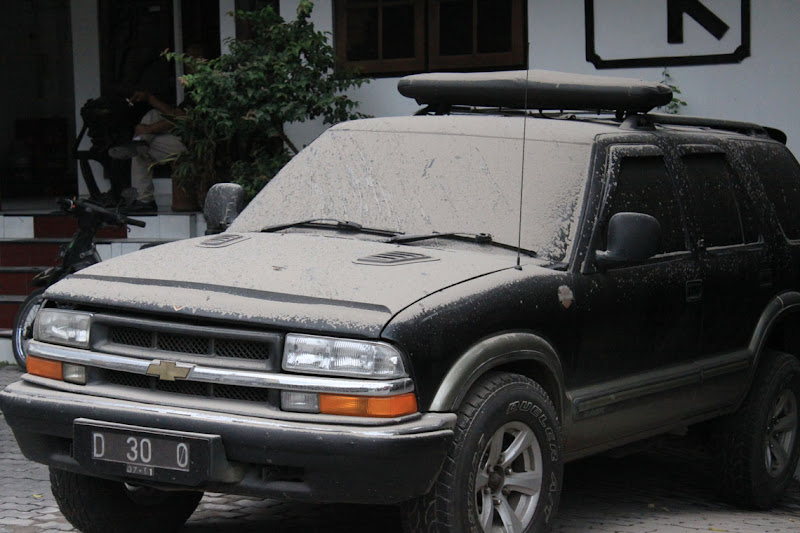
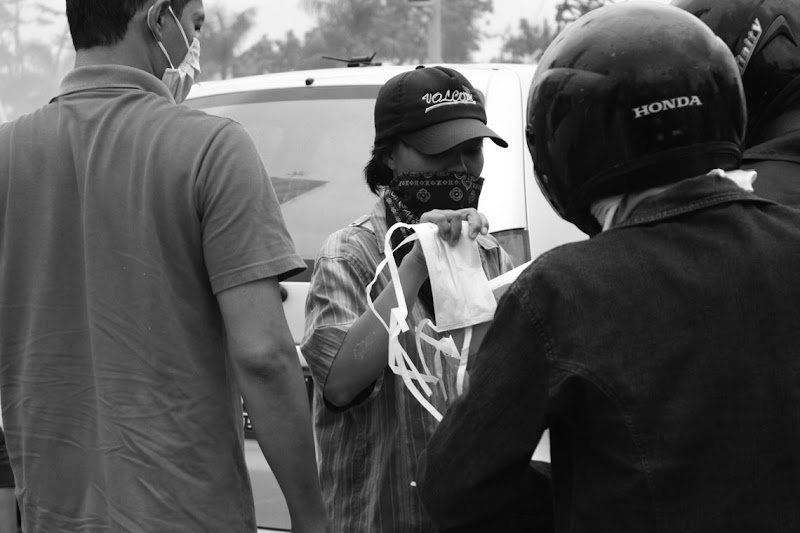
..Volcanic ash from Mt Merapi on Jl. Sosrowijayan

..Volcanic ash from Mt Merapi's eruption on Jl. Sosrowijayan

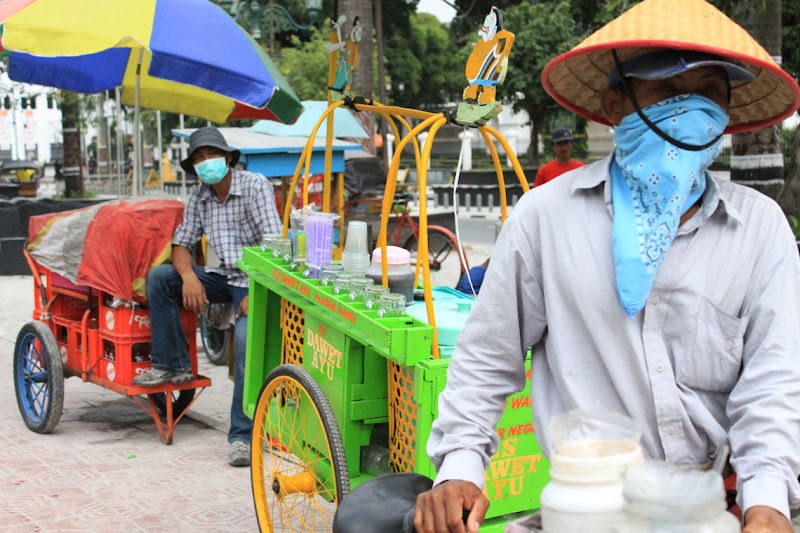
Masks all around on Jl. Malioboro...

Masks being handed out to everyone to protect against the ash...

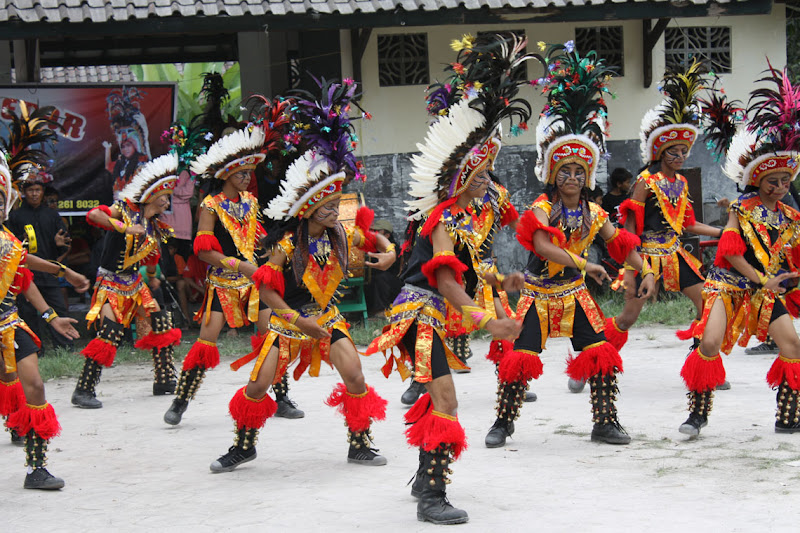
Incredible costumes on dancers from Magelang, Central Java

..such an amazing dance to watch... I especially loved the sound from the bells on their legs!

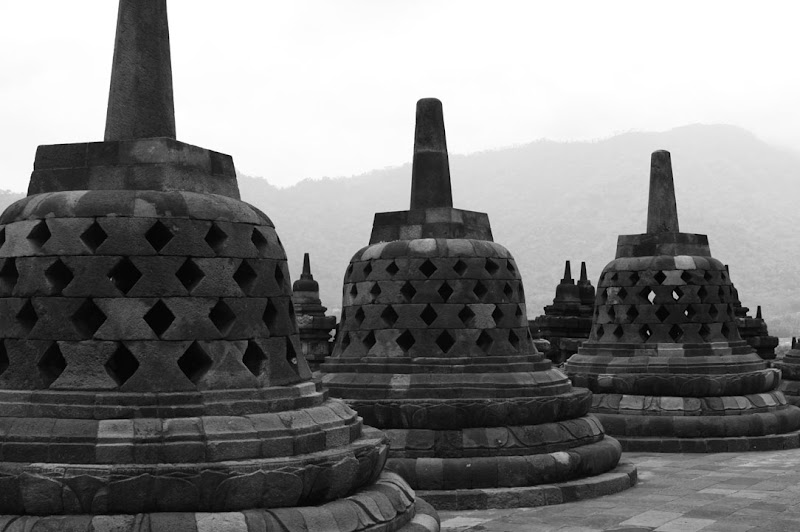
Borobudur - The biggest Budha Temple in the world.....
Being a Bule

Since I first came to Indonesia (and up until this point) I have been confused. Any time I walked around the streets of this city, or just took a stroll to the supermarket, strange things would happen. Apart from the cries of “hello mister” with my initial thought that maybe I was looking a bit manly on that particular day, people would go past on their motorbikes and look at me in fear or happiness, nudge their passengers and say, “bule”. Little children would start crying and pointing and saying this strange word, “bule”. Oh god, what had I become? What did it mean? Monster? Freak? Why were the children crying? Why were eyes lighting up? Since I was alone for a lot of the time, I started to become a little paranoid at these strange reactions.

When I asked the teachers at the school what this word meant, they told me that it was a word to describe a ‘white’ person, just a general term like we call all of the people with black hair and dark eyes “Asians”. Like with any single word that is used to describe a range of ethnicities, the term brings with it a layer of stereotypes and generalizations. In Australia it isn’t rare to hear a person who has been cut off while driving in their car by a person with black hair complain, “bloody Asians, they just can’t drive”, or “don’t go to that place, it’s full of Asian gangs”, or “those Asians always make a mess when they come into my shop”. Whenever I heard a person make one of these sweeping statements I would say, “You know that Asia is made up a lot of countries and you are putting over 2 billion people in the same bag, are you sure you know what you’re saying?”.

Now, as I find myself living in a country as a minority, there is nothing I can do to avoid being categorized as a bule, with all of the funny meanings that Indonesians give to this term. On one hand it’s great – usually Australians are stereotyped as a little crass, a bit uncultured, drunken, overweight and football lovers, but now I had a chance to be put in a category with some high class Europeans – I always wanted to be a little French, and now I had become a bule, I could put on my beret, put my baguette and cheese in my bike basket and cycle off to have some wine in the park with my friends. I could put on a cowboy hat and become a Texan cowboy, I could put on a white glove and test for dust in my local restaurant and pretend to be a German health inspector. Ah the sweet freedom of guilt free stereotyping.

It doesn’t matter what a bule does in Indonesia, because to become this ‘other’ and thus ‘stranger’, what is regarded as fact firstly is that you are different to Indonesians. Indonesians have important rules about how they live, how they support their families, when they eat and fast, who they can marry, how they can define themselves, which are all important things in order to be accepted by your community who (without any kind of government assistance to support you when you are in trouble) will be the people who you will need to turn to when you find yourself in trouble, when you can’t pay your hospital bills or need to get married, or your husband loses his job. Indonesian parents have a right to demand things of their children and to be a central figure in shaping their futures, and their children accept this. But if you are a bule living in Indonesia, you are not expected to follow these rules, people don’t judge you based on the decisions you make in your life or how you dress; they already expect you to be a little different and freakish and only look on in wonder.

I constantly find myself in hilarious conversations with Indonesians, who assume some very funny things about all bules; we are all tall, we love wearing bikinis, we are all outspoken and confident, we are all rich and can afford to spend half our lives travelling, we love Bali, we are free, we have no religion, we love shopping malls and fancy restaurants, we have sex with whoever we want to whenever we want to, we are more beautiful and handsome than Indonesians, and life is one big orgy of sex, drugs, all night parties and eternal freedom.

Any way that I attempted to explain the differences in people, or told them that anything about myself in order to assert my individuality such as my dislike of public speaking (they would laugh at me thinking I was only pretending to be shakie and feel sick before a presentation), I have never worn a bikini, and god, if they could see my bank account, but all to no avail. The picture is stuck in their heads. And I can see why.

The only bule people that general people meet or see are either on television or else being driven around by their drivers, nannies in tow, spending big sums of money as though it were mere pocket change. As the average Indonesian lives on less than $100 a month, this creates a massive gap in realities.

When I compare the stereotypical image of the Indonesian to the bule, some things ring true about the differences. And I can see that through Indonesian goggles, bules are strange people.

For one, it is common for bules to leave their families and embark on journeys around the world. Of course any bule that an Indonesian meets comes from somewhere else; they have never left their own country to see how a regular person lives at home in Australia, or the US, or the suburbs of France.

For many bules, even if our parents or grandparents don’t agree with the choices we make in our lives, we still make those choices anyway. Another thing is our lack of religion; in a country such as this where to have some kind of religion is a given and an important part of your worldview and identity, to meet these strange bule types who have no belief in God, or don’t see the importance of choosing a religion, or who may think that religion is a thing of the past, isn’t easy to digest.

My Indonesian friends were afraid for me when I came to Indonesia alone. They thought the building that I was living in was haunted, and refused to ever enter alone. They worried about me having no family around me, as their families are the roots that hold them together and help them to grow. A common question you may be asked here is “who are you living with?” and when I tell them that I live alone, it is almost as though their eyes well up with tears in sympathy for me. No religion, no husband, no children, no family; what on earth was I doing with my life? Kasian deh lo!

As for the common belief that bules love to shop at supermarkets, well, that is true. I love going to the supermarket and seeing familiar items on the shelves – price tags I can read, all of the essential items at my fingertips, and I still haven’t got any idea of how other people shop here. I was so surprised when a boy knocked at my door the other day from the warung (little box of a shop 3 metres x 2 metres where the owner often lives) close to my house, with a steaming bowl of indo mie (aka 2 minute noodles with an egg, chili sauce and a green leaf of some kind), some cigarettes and a couple of ice teas that my pacar had ordered. I didn’t know that you could order hot food from the little box of a shop. Only an Indonesian would know that. And only an Indonesian would have the phone number of the local warung so they can deliver direct to your door rather than having to walk the 20 metres to the shop.

Please, be patient here as I unashamedly spew forth some stereotypes about over 200,000,000 Indonesians.

The average Indonesian lives as part of a kampung – like a small suburb – where the doors are open, and what other people in the kampung think matters; they are your community, and they are there to care for you, to protect your house, to collect your rubbish, to meet at the local mosque, to do all of the things that a bule would expect their local government to take care of, and to make sure you are living a good life, within the rules. They will support you if you are in trouble. The average bule lives in a more isolated box where you make your own decisions, try not to offend the neighbours if you know them at all, but if you do, hope they will get over it.

Now, just to make it clear, if I am on a new adventure, anything is acceptable to me; sleeping in a train station, eating rice or any kind of slops for all meals, but when I am in a place long term, a place that I want to call home, my wants and needs alter. I like hot water coming out of a jet when I shower; an Indonesian is happy with a bucket of water and a ladle. I like toilet paper and a flushing toilet. An Indonesian is fine with a squatting toilet and the same bucket and ladle (I still don’t get this). I like to sit in a chair when I need to rest my legs; Indonesians are happy to sit on the floor or sit comfortably in a squatting position which hurts my knees just to look at. I prefer to sit in a half empty restaurant with space to move; Indonesians are happy to crowd onto one bench and slurp noisily. If I have to get a train during peak hour and stand all the way home you will see steam coming out of my ears; an Indonesian will stand for 2 hours stuck in traffic on a rickety bus and still manage to chat on their blackberries.

I like to define my meals as breakfast, lunch and dinner where rice is more of a dinner option; if an Indonesian doesn’t eat rice with each meal, they will never be full. I like to go into my own room when I want to and close the door and be alone; an Indonesian often doesn’t have this choice and feels alone if they aren’t surrounded by people. I like to add my own sugar to my coffee or tea, usually just a teaspoon or a spoon and a half; an Indonesian is happy to have their tea with 7 tablespoons of sugar already added. I like to have a price tag on the items I am buying and get a guilty feeling if I dare to ask for a discount; an Indonesian will argue tooth and nail to lower even fixed prices and still manage to befriend the shop owner.

I like to be on time for appointments and feel bad if I am late; Indonesians live in a realm of jam karet (rubber time) where it is acceptable to be 2 hours late. When I am ready to leave, I leave, often making sneaky exits; an Indonesian will wait patiently for their friend to solat (pray) first and then respectfully shake hands of everyone in the room, and if there are older people in the room, an Indonesian will cium tangan (take the elder’s hand to their forehead) to say goodbye.

Obviously to live beside a mosque as an Indonesian (I don’t know if this only counts for Muslims) is a bonus, the sound of the call to prayer may be like listening to a classical symphony; to me it is a lot of noise with “ya Allah” being the only 2 sounds I can understand.

I was yelled at so many times in Melbourne for not standing on the left hand side of the escalator (or right hand side to walk), “hey, stand on the left or bloody move out of my way!”, that I am always conscious about being in people’s way; an Indonesian will stand in the middle of the escalator or at the top of the escalator having a chat blissfully unaware of the people behind. If I rear-end a vehicle it will ruin my day and my insurance premiums; in Indonesia to bump your motorbike into the person in front of you can happen 20 times on the way home without anyone being concerned.

The differences are rich and varied; from every day things to overall consciousness. Indonesians are teaching me about patience (I have a long road to travel here) and the joy of community. They are also teaching me the joy of stereotyping.

It cannot be denied that I am a strange person; I am a bule. And this definition allows me to be a total freak. And there is so much freedom in that.
Add to DeliciousAdd to DiggAdd to FaceBookAdd to Google BookmarkAdd to RedditAdd to StumbleUponAdd to TechnoratiAdd to Twitter

Art Summit Indonesia VI, 2010

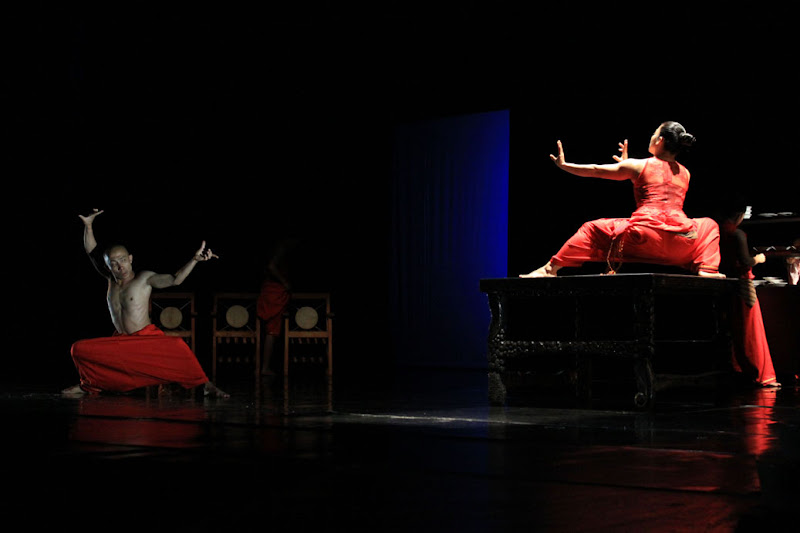
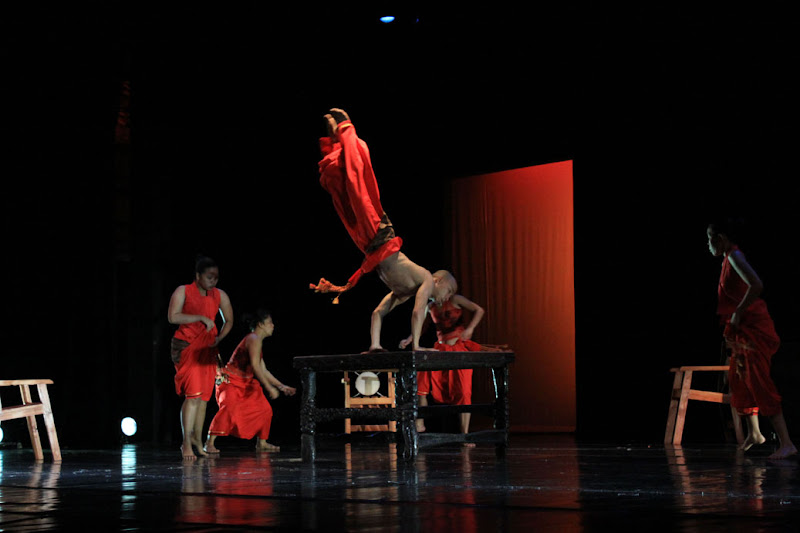
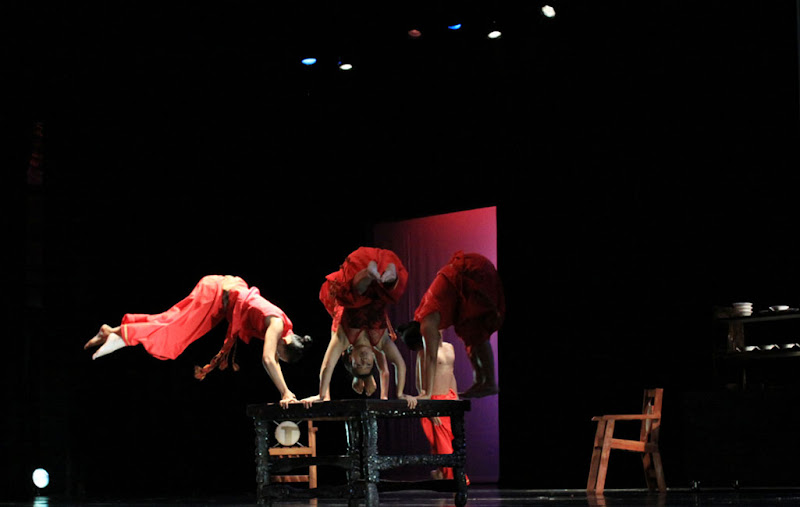
I am a big fan of dance and tonight’s performance of “Rantau Berbisik” by Nanjombang Dance Company from Padang was absolutely divine.  The strength and control of these dancers was incredible and the stage lighting and costumes made it really special…. drumming on nappy pants too…. now I’m also a huge fan of that..

so graceful..

..a beautiful moment..

this male dancer almost had me in tears..

what a powerful performance..